


Bio:
Diane Fenster is a fine art photographer and digital artist based in Pacifica, California. A pioneer of digital imaging, she was the first artist inducted into the Photoshop Hall of Fame in 2001. Her work explores memory, mortality, myth, and the inner life, drawing on Jungian depth psychology, alchemy, and the natural world. Her work has been exhibited at the Griffin Museum of Photography, the Center for Photographic Art in Carmel, CA, and PH21 Gallery in Budapest and Barcelona, and recognized three times by Photolucida’s Critical Mass Top 200 photographers.
Statement:
Rappaccini’s Daughter Transformed
In Nathaniel Hawthorne’s “Rappaccini’s Daughter,” Beatrice is raised within her father’s poison garden until she herself becomes venomous — beautiful, untouchable, and finally destroyed by the antidote meant to save her. Three men shape her fate: the father who made her, the lover who feared her, the doctor who poisoned her with a cure. She dies at their hands, an innocent casualty of male science and male desire.
Rappaccini’s Daughter Transformed refuses that ending.
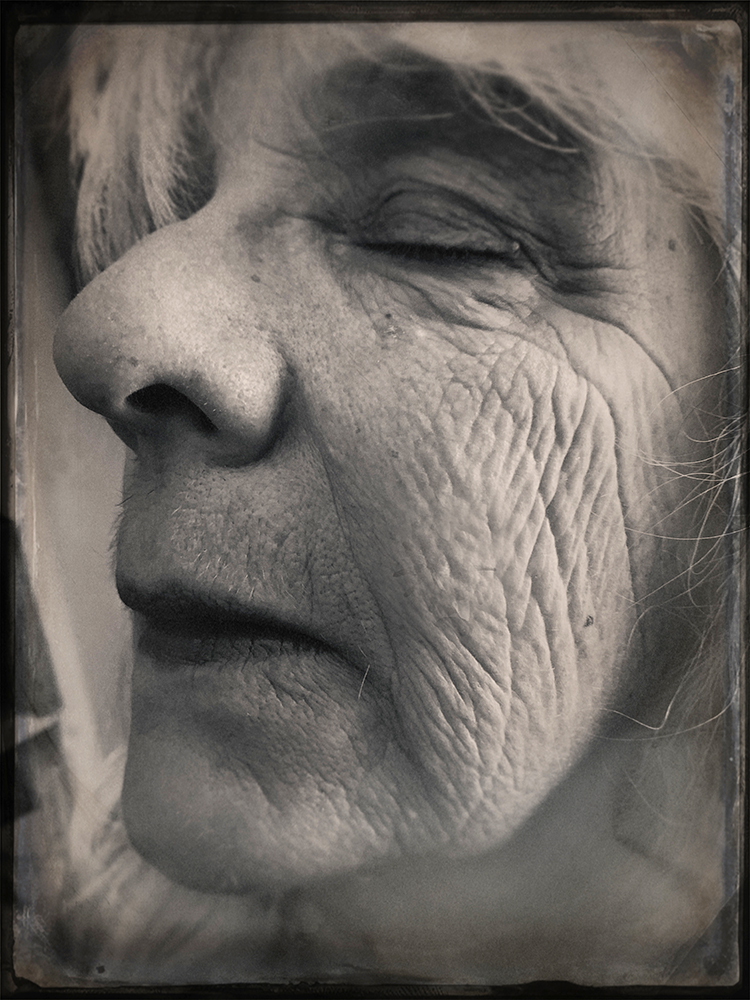
Here, Beatrice lives. She survives the antidote, survives the men, survives the story itself. She grows old inside the garden walls, and what her father intended as a prison becomes her dominion. The poisons that marked her as monstrous become her pharmacopoeia. Season by season she deepens into what the world calls a witch: mistress of spells and tinctures, keeper of plants that heal and plants that kill, a woman who understands that these are often the same plant, differing only in the dose and the hand that administers it.
These photographs imagine Beatrice transformed — the crone the nineteenth century could not permit her to become. She is no longer anyone’s daughter. The garden answers to her now.
